
A small business with solar panels can still have an expensive electric bill. The reason is often timing. Solar may produce well at noon, while the business reaches its peak demand during startup, production cycles, refrigeration, HVAC, or late-afternoon operations.
Adding more panels can help annual energy production, but it does not always solve demand spikes or outages. In many cases, commercial and industrial energy storage deserves a closer look before another panel upgrade.
Demand Charges Change the Storage Conversation
Commercial bills often include demand charges, which are based on the highest power draw during a billing interval. A short spike can raise the bill even if total monthly kWh use is not extreme. Batteries can discharge during those spikes, reducing the peak seen by the utility.
This is called peak shaving. It does not mean the business uses less energy overall. It means the site smooths its grid demand by drawing from stored energy when power demand jumps.
The Department of Energy notes that storage can improve power quality and help match supply and demand. For commercial sites, that matching can have direct financial value if the utility tariff penalizes peak demand.
Solar Self-Use May Be More Valuable Than Export
If a business exports midday solar at a low credit and buys power later at a higher price, a battery can keep more of that solar on-site. The storage system charges when solar output is high and discharges when operations need power.
This is especially relevant for businesses with refrigeration, workshops, offices, clinics, warehouses, restaurants, or EV charging. The battery can help keep solar energy useful after the sun angle drops or when a cloud bank cuts output.
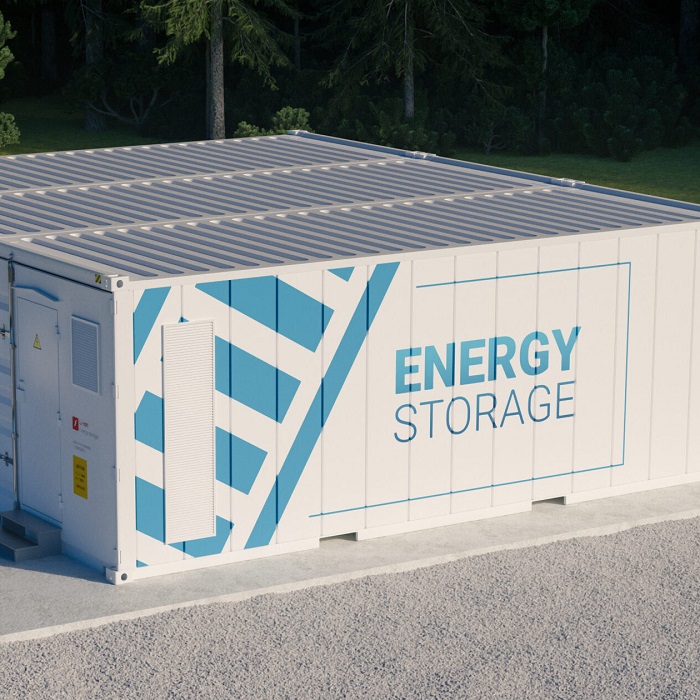
ESYsunhome lists C&I energy storage products alongside residential ESS, EV charging, and hybrid systems. Its ES125-261 ESS, for example, is listed as a 125 kW / 261 kWh commercial storage product, while the ES130-261 hybrid system is positioned for PV-storage-diesel applications.
Resilience Has a Business Value
For a home, an outage is inconvenient. For a business, it can mean spoiled inventory, missed appointments, lost production, closed registers, security gaps, or damaged equipment. Storage can support critical loads long enough to ride through short interruptions or give staff time to shut down safely.
Not every business needs full backup. A grocery store, data closet, medical office, or farm operation may define critical loads very differently. The battery should be sized around the cost of downtime, not only around the monthly utility bill.
When Storage Beats More Solar
Another panel upgrade may be the better move if the site needs more annual kWh and has plenty of useful daytime load. Storage may be more attractive when:
· Demand charges are significant
· Solar exports have low value
· Peak load occurs outside peak solar hours
· Outages create real business losses
· EV charging causes demand spikes
· A generator is already used and fuel costs are high
The best answer often combines both: enough solar to produce low-cost energy and enough storage to place that energy where it has the highest value.
Software Matters More in C&I
Commercial storage is not a set-it-and-forget-it appliance. It needs dispatch logic, monitoring, remote control, alarms, and clear reporting. The system must know whether the priority is peak shaving, backup reserve, solar self-consumption, or a hybrid strategy.
For small businesses, the case for storage should be built from the utility bill, load profile, outage history, and growth plan. When those numbers point to peak demand or resilience pain, C&I ESS can solve a problem that more panels alone cannot.